Skin, longevity and storage
Getting the most out of your perfume
Fisfis Academy · 10 min read ·
What you will learn
- Distinguish between longevity, sillage and projection.
- Apply perfume in a way that improves longevity.
- Store perfume so that it keeps well for a long time.
- Longevity
- How long the scent remains noticeable on the skin.
- Sillage
- The scent trail you leave behind; how much the scent can be noticed when you walk into a room.
- Projection
- How far the scent reaches from your skin; whether people near you notice it.
Application
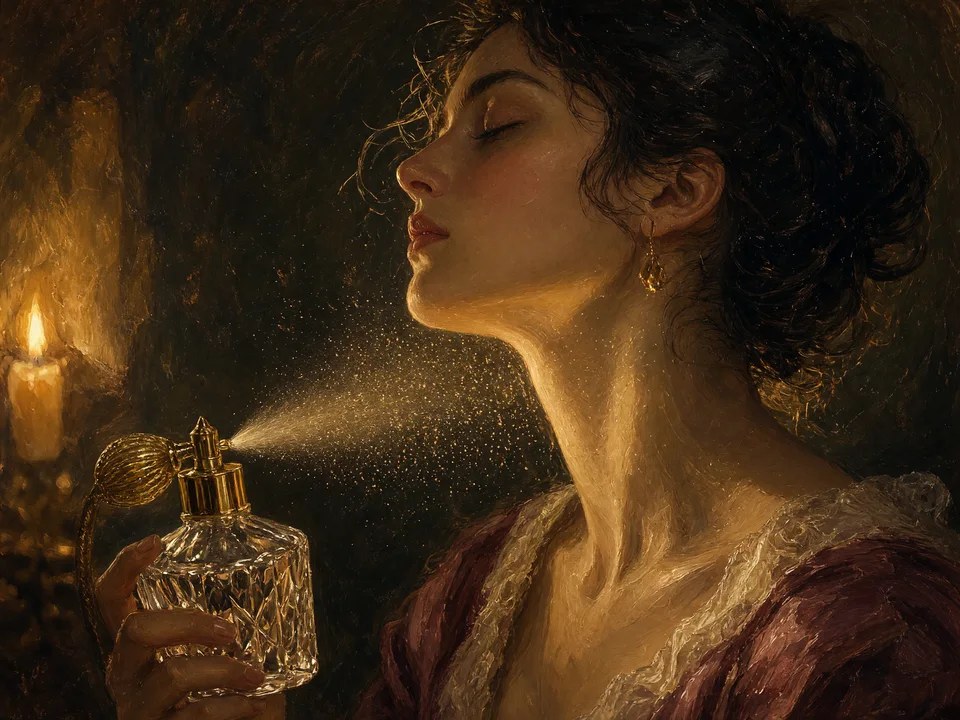
- Moisturized skin holds scent better. Using an unscented moisturizer after a shower can improve longevity.
- Warm areas such as the neck, inner wrists and inner elbows help the scent spread.
- Not rubbing your wrists together is generally recommended; the friction can speed up the opening and change how the scent develops.
- Perfume applied to fabric lasts longer, but some materials can stain; be careful with delicate fabrics.
Storage
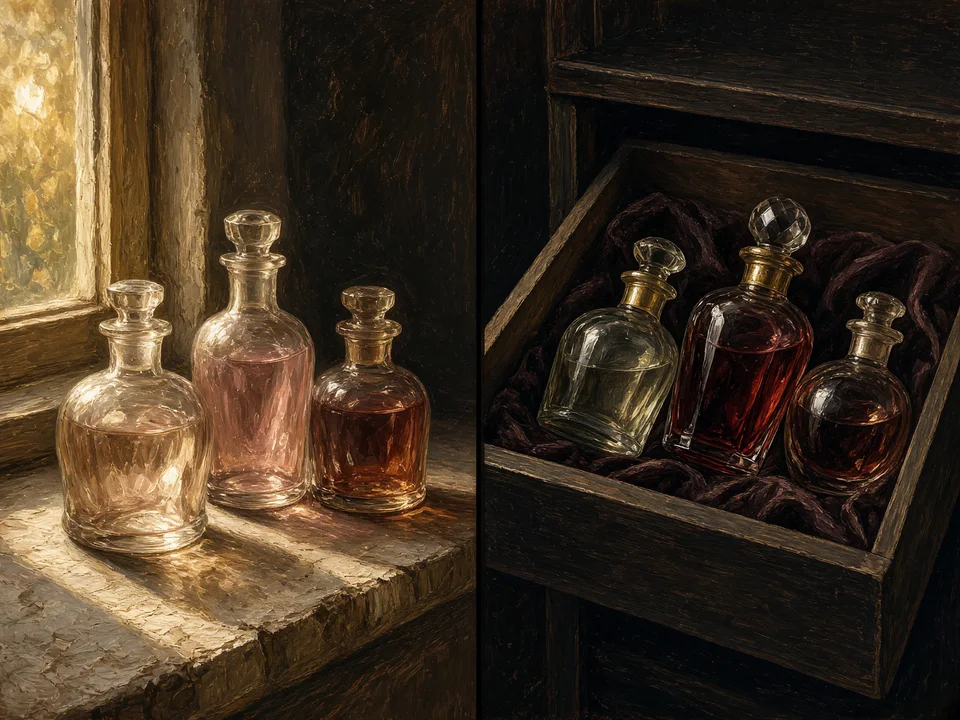
Perfume's three enemies are light, heat and oxygen. Keep the bottle in its box or in a dark, cool cupboard. Bathrooms, where temperature and humidity keep changing, are not ideal. Under the right conditions many perfumes keep well for years; fresh, citrus-led scents, however, usually change sooner.
Protects perfume
- In its box or in a closed, dark cupboard
- A cool, steady temperature
- A tightly capped bottle
- A bottle with little air space left
Spoils perfume
- Direct sunlight
- A warm, humid bathroom
- Places with changing temperatures, like a car glove box
- Half-empty bottles that are opened and closed often
Key points
- Longevity is duration, sillage is the trail you leave behind, and projection is how far the scent reaches from your skin.
- Moisturized skin and warm areas support longevity and sillage; rubbing your wrists can change how the scent develops.
- Light, heat and oxygen are perfume's enemies; a cool, dark place is best.
- If redness or itching appears, stop using it.
Sources
- Charles S. Sell (ed.), The Chemistry of Fragrances, Royal Society of Chemistry, 2nd ed., 2006.
- Tony Curtis & David G. Williams, Introduction to Perfumery, Micelle Press, 2nd ed., 2001.